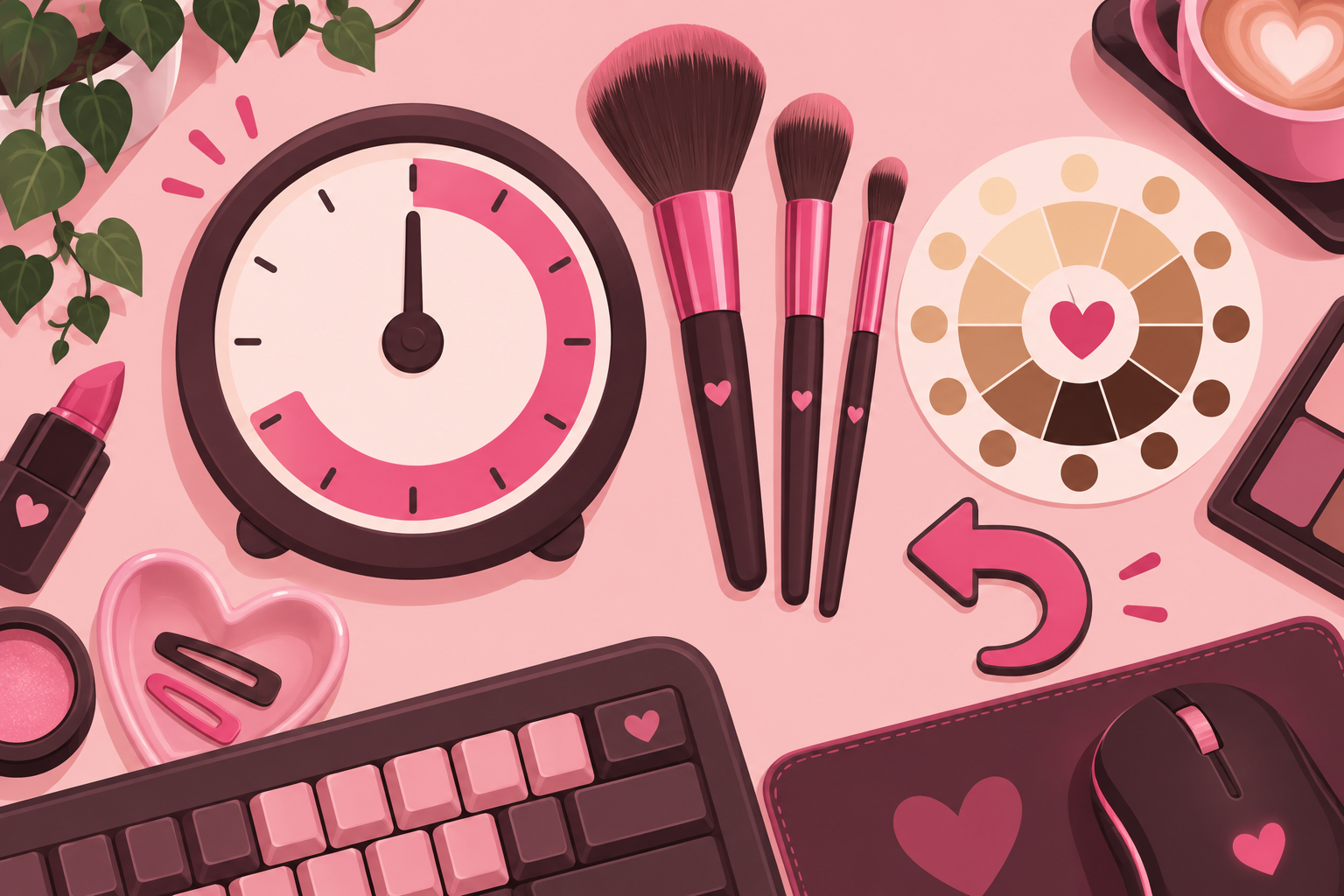
These are the habits that separate a frantic first round from a calm one. Everything below is drawn from how the vanity tools actually work — no myths, no invented scoring tricks.
Warm up in Freeplay
If Freeplay is available on your screen, use it before every session. Learn where each product lives on the tool rail, how the color controls behave, and — most importantly — where Undo sits. Muscle memory built in Freeplay is time saved in the 300-second window.
Set the skin tone first
Choose the skin tone before any makeup. Every shadow, blush, and lip color you paint afterwards sits on top of that base, so changing it mid-look means re-judging every color. Decide the base, then commit.
Test strokes before large areas
- Pick your product and color.
- Make one small test stroke on the canvas.
- Only then paint the full area.
A two-second test is cheaper than an Undo chain across a ruined eyeshadow wash.
Control brush size and strength
- The brush panel offers Size and Strength controls.
- Small size + short strokes for details like liner and brows.
- Larger size for broad washes like eyeshadow bases.
- Change one setting at a time so you can see exactly what each adjustment did.
Undo before experimenting, Clear only to restart
Locate Undo before trying anything risky. Undo steps back through strokes; Clear wipes the canvas for a genuine fresh start. Knowing the difference — and the location of each button — is what makes bold experiments safe.
Follow a stable order: eyes, lips, blush
A reliable sequence for the vanity phase:
- Eyes — shadow, liner, brows: the area voters study most in close-ups.
- Lips — color and liner.
- Blush or highlights — only if time remains.
Working one area at a time keeps the face coherent and leaves you with a presentable look at any point if the timer surprises you.
Save the last stretch for 3D and inspection
Reserve the final part of the round for lashes, hair, and a full-face check. Then read our voting guide — the first 2 seconds of your catwalk matter as much as the painting itself.